
Dimension thermal energy sources and components
Dimension thermal energy sources and district heating components. Include different injection points and a booster energy source for peak demand. Use the energy demand curve to avoid oversizing your energy source and have a better estimate of your CAPEX and OPEX right from the start.
Integrate renewables and excess heat sources
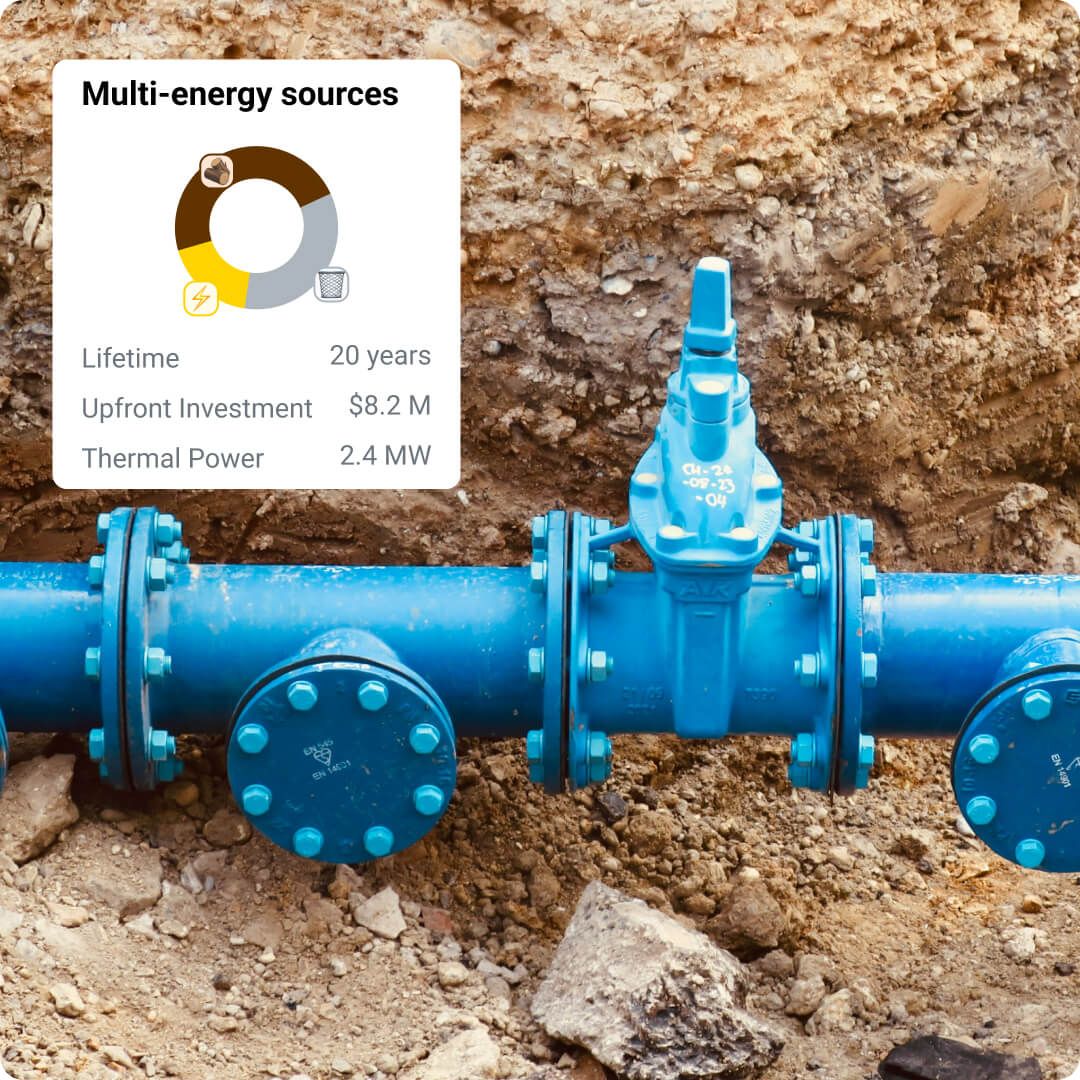
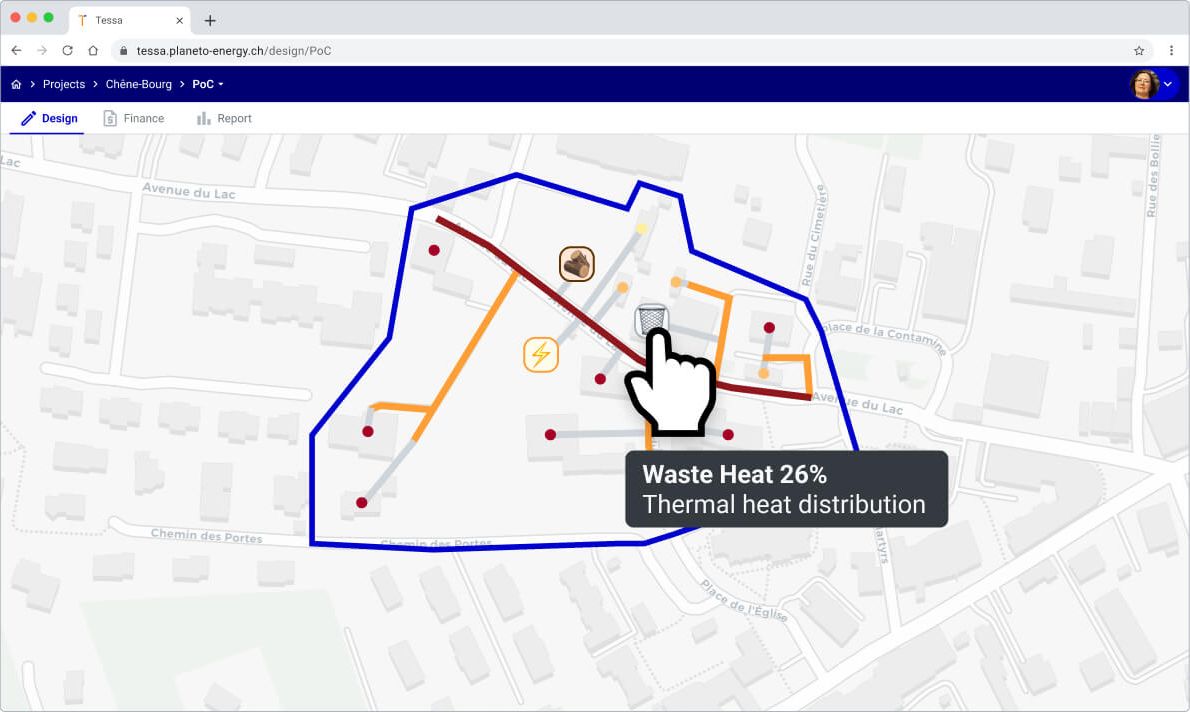
Include multiple energy sources (e.g., w ater source heat pump, air source heat pump, waste-to-heat, data centers, industrial excess heat, pellets and wood stove, electricity… ) and model your district with different sources and multiple injection points. Modify the data of your energy sources (cost, lifetime, installation cost…), simulate your network, and get financial KPIs.
Multi-energy sources and injection point
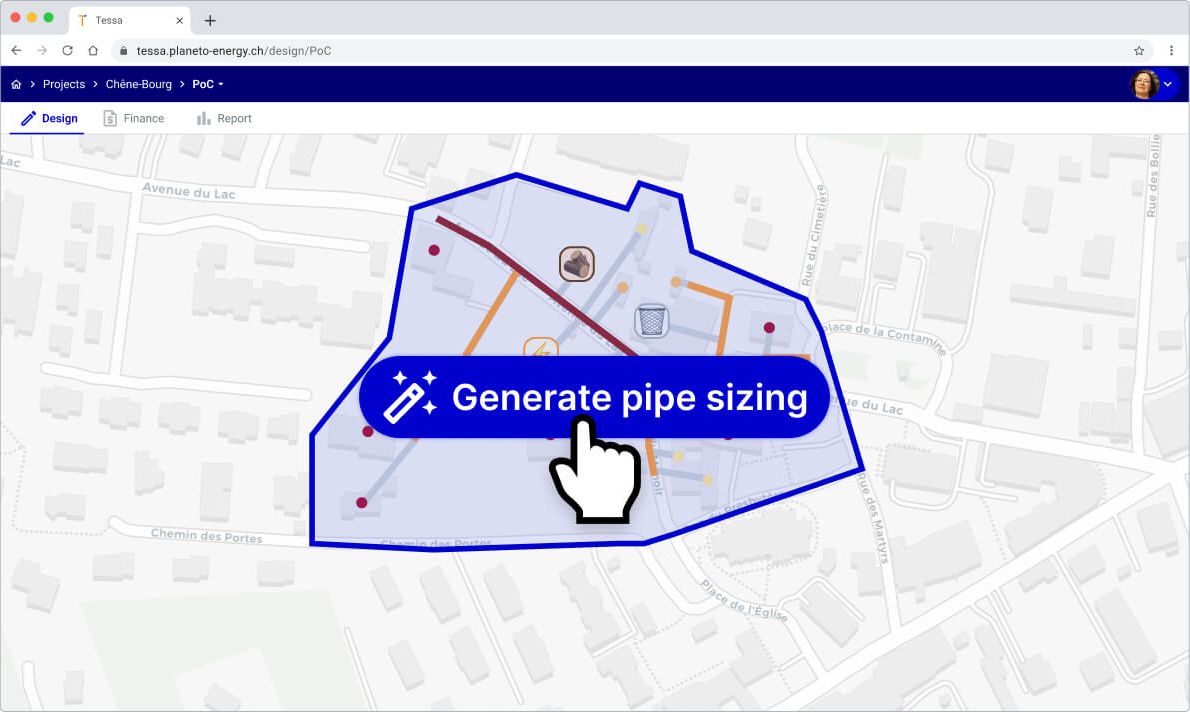
Easily integrate multiple energy sources and injection points in your network. Simulate the network operation to size the pipes and calculate thermal and pressure losses.
Low temperature anergy networks
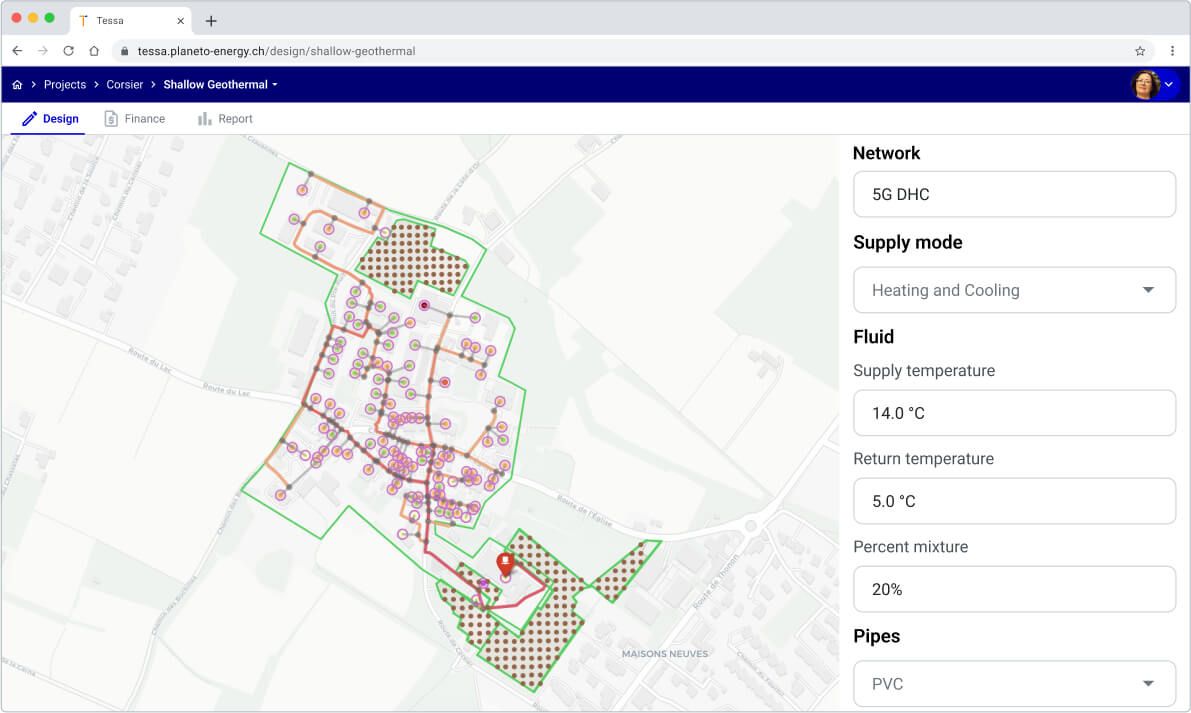
Simulate low-temperature anergy networks (5th generation district heating and cooling networks), sizing individual booster heat pumps. Integrate a low-temperature energy source in a closed loop network with individual heat pumps at the building level.
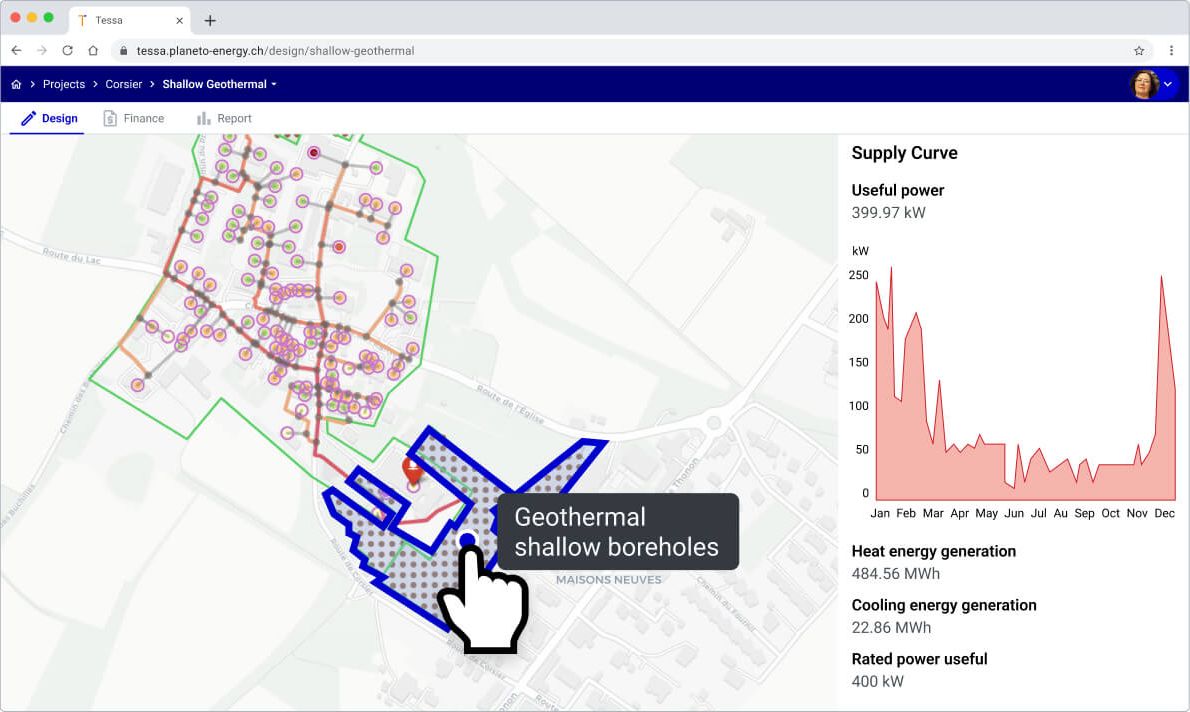
Shallow geothermal
Dimension and simulate a shallow geothermal energy field, and connect it to a thermal system (from a single building to a district heating and cooling network). Calculate the outlet and inlet temperatures as well as the heat extraction rate of the boreholes (single boreholes or fields of boreholes).
Powerful users, powerful stories
 Grandvaux - Switzerland

Haute-Sorne - Switzerland

Schaffhausen - Switzerland